Pattern analyst § Systems designer § Author § Builder

Jared Clark  ·  San Diego  ·  Est. inquiry 2006

Jared
Clark

I design social technology that lets communities hold together through shared truth-seeking practices rather than shared fixed beliefs.
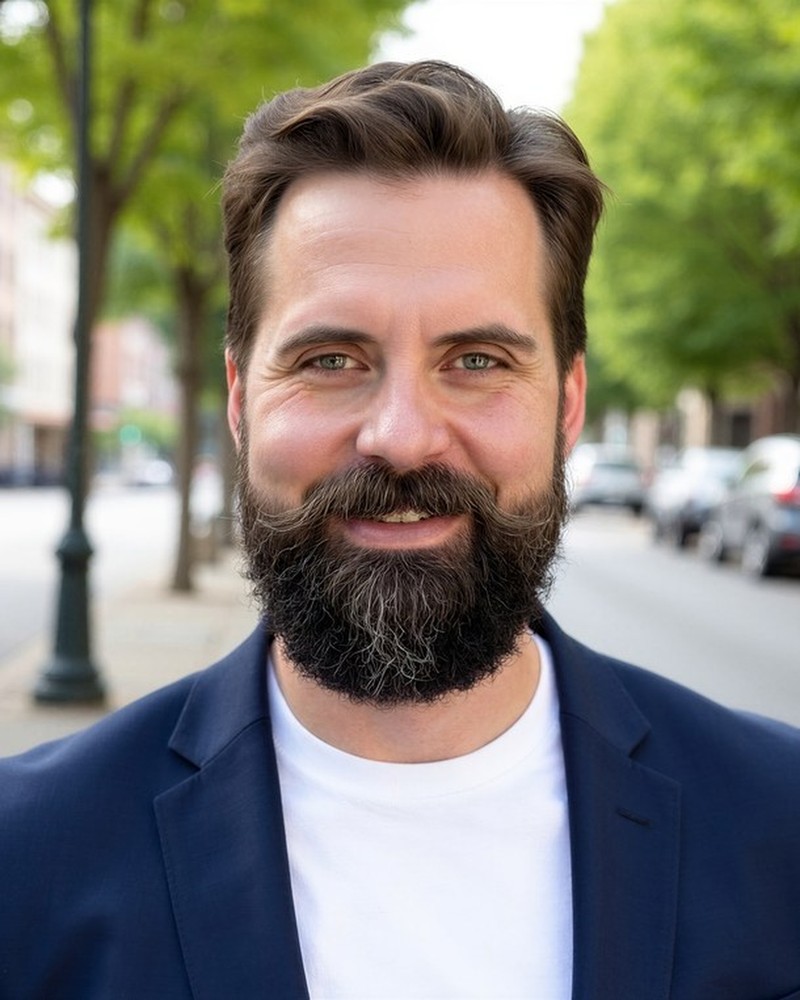
Portrait of Jared Clark
❖ ❖ ❖
I.

What I'm actually trying to do

Every durable human community in history has solved the same problem: how do you keep people together when reality gets hard? The answer, almost universally, has been to anchor the group in a narrative that cannot be disproven — sacred authority, persecution-proof stories, infinitely elastic interpretation, and moral penalties for doubt.

It works. It creates belonging, meaning, ritual, and collective purpose. But it works by making intellectual honesty expensive. The implicit deal: you get security and community, but you give up some of your sovereignty over what you're allowed to think, question, and conclude.

I lived inside that deal. I was trained by it — raised in it. Then I reached the point where the spiritual comfort and security my religion provided came at too high a price. Not because I stopped caring about meaning, community, or the sacred. Because the institution had crossed from protecting truth to protecting itself.

I left. But I didn't stop needing what the institution provided. Nobody does.

Can we build communities where belonging comes from participating in a shared process of truth-seeking — rather than agreeing to fixed beliefs?

That's the question underneath everything I do. It's not academic for me. It's the question I couldn't stop asking after I walked away from everything I'd been told was undeniably true.

Communities that last need four things. And religions are really good at providing all four:

  1. A shared story

    Not a creed, but a narrative about why we're here and what we're reaching toward.

  2. Shared ritual

    Practices that bond people emotionally, not just intellectually.

  3. A shared moral project

    Something larger than any individual that gives collective purpose.

  4. A shared legitimacy process

    A trusted way to decide what's true and how understanding evolves.

But non-religious truth-seeking communities fail because they only provide one or two of the above. They become intellectual salons, stimulating but socially thin, or they drift into new ideologies, or they recreate the same authority structures they escaped.

The design principle I keep coming back to is this: even truth-seeking communities need a sacred center. But how do you make patient truth-seeking feel as sacred as a self-proclaimed eternal truth? That's the problem I'm trying to solve.

❖ ❖ ❖
II.

How I work

Four modes, in rough order of how I start thinking about anything.

ɡ

Pattern analyst

Seeing the shape before the substance

I study the recurring structures that make institutions drift from truth-seeking to self-preservation — sacred authority, persecution-proof narratives, interpretive elasticity, moral loyalty enforcement. These patterns appear in religions, corporations, political movements, and activist groups. They are structurally identical. Once you see them, you see them everywhere.

§

Systems designer

Protocols, not platforms

Diagnosis alone doesn't free anyone. So I design the actual practices — ritualized dialogue, viewpoint mirroring, structured inquiry, reflective listening — that could form the backbone of communities bonded by process rather than proposition. Technology here means social technology.

Author

Different doors into the same liberation

Different people need different entry points. So the same mission comes out as essays, books, poetry, children's fiction, and dialogue frameworks. Diagnosis without a replacement narrative creates a vacuum that fills with fear, not freedom. The replacement story is the work.

Builder

Unglamorous plumbing that makes a house livable

Ideas that don't ship don't matter. I run an operating system of sites, tools, and small platforms that turn the framework into things people can actually use. Most of it is plumbing. That's fine. Plumbing is what separates a concept from a home.

❖ ❖ ❖
III.

How I'm wired

I have an Architect personality type. I think through juxtaposition more than accumulation. I put two things next to each other and let the tension reveal something neither would on its own. I use questions as arguments. I prefer plain vocabulary over rhetorical performance.

What that means in practice: I care more about the frame than the fact — the paradigm is the gravity well, and facts don't travel across gravity wells without some distortion. The key to truth is in the paradigm first, facts second. You can't design truth-seeking practices from inside an echo chamber of your own fixed beliefs.

❖ ❖ ❖
IV.

What I'm building

All of this is one mission in different formats.

— Diagnosis —

Making the patterns visible.

— Social technology —

The practices themselves.

— Writings —

Format-diversified delivery of a single mission.

The Patterns Trilogy

Unmasking the Patterns

Identifying the patterns that hold you in place.

Tracing the Patterns

Where those patterns came from, and how they took hold.

Unseating the Patterns

Turning stagnation patterns into growth patterns.

Religion & meaning

Religion 2.0

An upgrade to religion's architecture — practice at the center, not proposition.

The Enchantment

Why we're more captured by what we can't disprove than by what we can defend.

The Myth We Need

Step outside a myth, analyze its mechanisms, then sketch one you might actually choose.

By Their Fruits

The Sermon on the Mount already diagnosed what Christianity would become.

Biblical insights

The Beam and the Mote

Seeing your own frame, and inhabiting someone else's — two sides of one capacity.

The Wheat and the Tares

Subjectivity lets us love and lets us manipulate. The answer is better subjectivity, not less.

The Leaven of the Pharisees

What Christ named in his day still spreads invisibly in ours — once you see it, you can walk free.

No Longer a Schoolmaster

The cocoon that forms you is also the thing you must outgrow.

Creative writings

Eve's Story

Eve's reach for knowledge wasn't the Fall. It was the beginning.

No Proxy

Spiritual maturity means standing before God without an intermediary.

Critical essays

When the Treasure Seeks Deeper

Watching a tradition retrofit itself away from the truth it started with — and dress the drift up as fidelity.

For young readers

The Terralings

Five imaginative creatures, five ways stories shape the mind — for young readers.

❖ ❖ ❖
V.

Day job

I run an AI governance and quality consulting practice serving FDA-regulated industries. That work pays for the mission above.

For consulting inquiries: [email protected]

Credentials, services, case work: LinkedIn →

❖ ❖ ❖
VI.

The sentence that started it

Almost twenty years ago, while I was still fully invested in a faith staked on its own truth claim, I read John Milton's Areopagitica. One passage touched me in a way that I didn't yet have the permission to recognize.

Truth is compar'd in Scripture to a streaming fountain; if her waters flow not in a perpetuall progression, they sick'n into a muddy pool of conformity and tradition. John Milton — Areopagitica, 1644

I bought thestreamingfountain.com and .org that day. I couldn't have told you why. Most of the years between then and now, I wasn't free to really internalize what Milton was saying — unfalsifiable beliefs don't let you. But the soul knew before the mind had permission.

The institutions that claim to protect truth by restricting inquiry are the very thing that corrupts it. I spent two decades living inside that contradiction before I finally walked out. Milton's words were waiting for me to catch up to them.

❖ ❖ ❖
VII.

Contact

Find me here

[email protected]

LinkedIn →